Your main entrance does more than help you get in and out of your home. It is the first thing you, your family, and your guests experience every day. In Vastu Shastra, it is also traditionally viewed as the primary point through which energy enters the home.
If you are trying to find the best entry as per Vastu, you need to start with direction, but do not stop there. The position of the door, its size, lighting, colors, steps, plants, and even the amount of clutter around the entrance can all influence how welcoming and balanced the space feels.
As per the traditional Vastu principles, north, northeast, and east are usually preferred directions for a home’s main entrance. You need to keep your entrance bright, open, clean, and easy to approach. A strong wooden main door, an uncluttered threshold, thoughtful colors, and proper door placement can help you create a more welcoming Vastu-conscious entrance. If you want to know more, keep reading this blog.
Why Is Main Entrance Vastu Important?
Think about how you feel when you walk up to a dark, cramped entrance with shoes scattered everywhere. Now compare that with a bright doorway, a clear path, a healthy plant, and a door that looks solid and inviting.
You feel the difference before you even step inside.
That practical experience lines up well with the traditional ideas behind Vastu Shastra for home entrance design. In Vastu Shastra, the main entrance is called the Simha Dwar or Mukhya Dwar. It serves as the transition point between the outer world and your personal space. According to ancient Vastu principles –
- Positive energy enters through the main door.
- The direction of the entrance affects financial growth.
- Mental peace and harmony start at the entrance.
This is why following the correct Vastu for the main entrance is often considered more important than interior Vastu. A beautifully designed home can still feel unbalanced if the entrance Vastu is overlooked.
|
Redesigning your entrance? Talk to our design team today. |
Which Direction Is the Best Entry as per Vastu?
If you are planning a new home, you have more freedom to consider the entrance direction from the beginning. If you already own an apartment or house, focus on making the best of the entrance you have.
Here is a quick main entrance Vastu direction guide –
|
Entrance Direction |
Traditional Vastu View |
Practical Design Tip |
|
Northeast |
Highly preferred |
Keep it open, bright, and uncluttered |
|
North |
Generally favorable |
Use good lighting and a clear entry path |
|
East |
Generally favorable |
Make the most of natural morning light |
|
West |
Can work well |
Pay close attention to exact door placement |
|
Northwest |
Placement-sensitive |
Review the complete floor plan before changing anything |
|
South |
Placement-sensitive |
Avoid assuming the whole home is unfavorable |
|
Southwest |
Commonly treated with greater caution |
Get the exact entrance position reviewed before major renovation |
North, east, and northeast are among the directions most commonly recommended for entrances in contemporary Vastu guidance.
1. Northeast-Facing Main Entrance
If you have been reading about Vastu for home entrance, you have probably seen the northeast mentioned repeatedly. Traditional Vastu gives the northeast, or Ishanya direction, special importance. Many Vastu guides therefore consider a northeast-facing or northeast-positioned entrance particularly favorable.
If your entrance is in this zone –
- Keep the approach open and easy to walk through.
- Avoid piling up shoes, packages, or unused furniture beside the door.
- Give the area good natural or artificial light.
- Use simple, calm finishes rather than making the entry visually heavy.
- Do not block the doorway with a large cabinet or decorative object.
We often find during interior planning that these recommendations make sense even beyond Vastu. When an entrance is brighter and less crowded, the entire home can immediately feel larger and more inviting.
2. East-Facing Main Entrance
East is another commonly preferred direction in house entrance Vastu.
- An east-facing entrance can receive pleasant morning light depending on the building, surrounding structures, and exact orientation.
- Traditional Vastu associates east with freshness and new beginnings.
- Light finishes such as cream, white, beige, or natural wood can work beautifully here.
3. North-Facing Main Entrance
North-facing entrances are also widely considered favorable in Vastu traditions and are often associated symbolically with prosperity.
- From an interior design point of view, do not focus on direction alone.
- Look at what you actually see when the door opens.
A good entrance should feel organized rather than crowded by storage, electrical panels, oversized shoe cabinets, or awkward furniture.
4. West-Facing Entrances
A west-facing home is not automatically a Vastu problem. Exact placement matters.
- Instead of judging the entire property from the word “west,” consider where along the western wall the entrance sits and how the rest of the home is arranged.
- Use practical Vastu tips for the home entrance such as keeping the doorway well-lit, clean, visually balanced, and easy to access.
5. Are South, Southwest, or Northwest Entrances Bad?
This is where online Vastu advice often becomes confusing. You may read that a south-facing entrance is always bad. Another article may tell you a specific south or northwest position can work perfectly well. That is why you should avoid judging your home based only on a compass direction.
- Northwest, for example, is treated as acceptable when properly positioned in some current Vastu guidance rather than being universally prohibited.
- Southwest entrances require more precaution compared to other entrance areas.
- However, if you have already made the door there, then avoid rushing into making any changes based on what you read from the internet.
How Should the Main Door Be Designed as per Vastu?
Your entrance door should visually feel important. Traditional main entrance Vastu recommendations commonly suggest making the main door larger or more prominent than the other doors inside the home. You can create that hierarchy through –
- A wider or taller entrance door
- A substantial frame
- Natural wood finishes
- Thoughtful lighting
- A clean nameplate
- Proper architectural detailing
The door should also open properly. You need to repair loose handles, squeaking hinges, sticking locks, and damaged frames rather than leaving them for months.
|
Request a free quote and start your project. |
What Is the Right Number of Steps at the Entrance?
If your entrance needs steps, Vastu traditions commonly favor an odd number of steps. Numbers such as 3, 5, or 7 are often suggested for smaller residential entrances. Vastu guidance for stairs also commonly recommends an odd number of steps.
But safety is priority number one. No need to include an extra step for the sake of arriving at an odd number. The riser and tread height, handrail, drainage, and night lighting matter more than any symbolic number.
What is the Best Material for a Main Door as per Vastu?
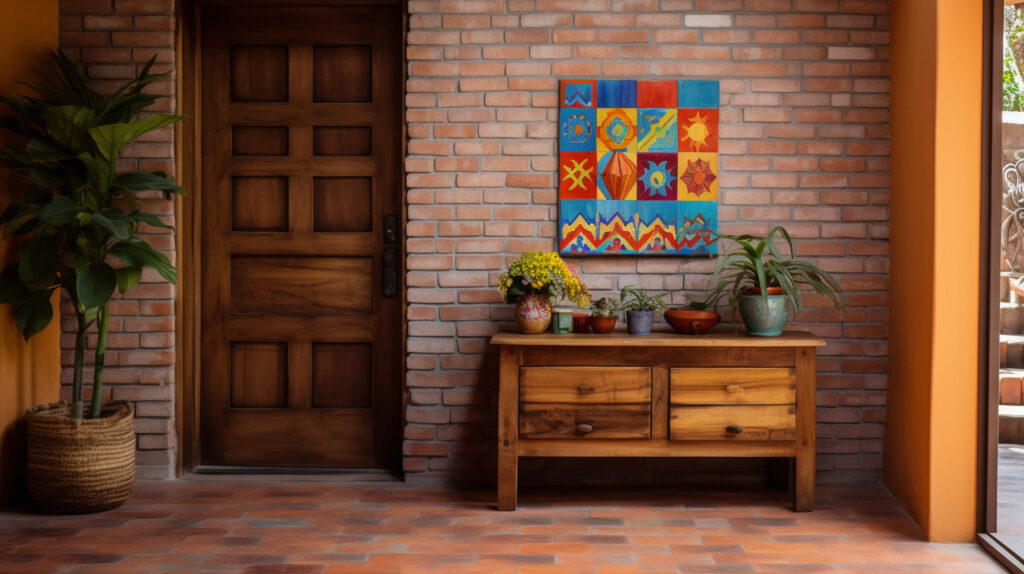
Solid wood remains one of the most popular choices for a Vastu-conscious entrance. Wood also works well from an interior design perspective because it gives the entrance visual warmth and makes the main doorway feel substantial.
If solid teak or another premium wood does not fit your budget, a well-made engineered door with a quality natural-looking finish can still create a beautiful entrance.
Metal and glass do not have to disappear completely. They can work as accents, grills, hardware, or controlled decorative details depending on the architectural style.
Colors for Main Entrance as per Vastu
There is no need to repaint a beautiful front door because you saw one Vastu color chart online. Traditional Vastu often links entrance colors to direction. You can take an example. Light, natural shades are commonly recommended for east-facing entrances, while green and blue are often suggested for north-facing doors.
For a modern home, you can use that guidance without making the entrance look dated. You can consider –
- Cream
- Warm white
- Beige
- Light natural wood
- Muted green
- Soft blue
- Warm brown
The color should also work with your flooring, walls, lighting, and overall interior palette.
Plants and Greenery Near the Main Entrance
A plant can soften a hard entryway and make coming home feel more pleasant. In Vastu traditions, plants such as tulsi and money plants are commonly used around homes, although recommendations about their exact location vary between Vastu schools and floor plans. Tulsi is frequently recommended for north, northeast, or east zones.
For a practical entrance, you can do the following –
- Choose healthy, easy-to-maintain plants.
- Remove dead or dried leaves.
- Do not let large pots narrow the walking path.
- Keep thorny or oversized plants away from the doorway.
- Use a proportionate planter that complements your interior style.
If you have a tiny apartment landing, one carefully chosen plant often looks better than trying to squeeze in several.
|
Get a customized entrance design plan from Inlight Interiors. |
Nameplate, Lighting, and Entrance Décor
Your nameplate should be clean, readable, and in good condition. You can also add traditional symbols such as Om, Swastik, Ganesha motifs, or a toran if they are meaningful to your family.
More importantly, keep your entrance visible. Good lighting helps both practically and aesthetically. Current entrance Vastu guides also consistently recommend a bright, welcoming doorway. Use warm ambient lighting instead of creating a dark landing with one harsh overhead bulb.
Common Myths About Main Entrance Vastu
Myth – A staircase near the entrance automatically creates bad Vastu
Not at all times.
Many Vastu traditions advise against placing a staircase directly opposite the main entrance because it is believed to disrupt energy flow. But this does not mean you should never place stairs near the entrance. In apartments especially, common staircases are often outside your control. You need to focus on your own doorway, lighting, cleanliness, and interior layout.
Myth: An underground water tank below the entrance always ruins the house
You need to be careful with absolute claims like this. Vastu traditions have specific recommendations about water placement. But some homes also have plumbing, structural, municipal, and site constraints. Do not undertake expensive excavation or structural work based on an online remedy alone. You need to have the actual floor plan reviewed before making a major change.
Myth: A south-facing door means you need to move
No.
Your entrance’s exact location is more important than simply labeling your entire home “south-facing.” You should also consider the interior arrangement, doorway placement, ventilation, lighting, usability, and the complete plan.
Main Entrance Vastu for Apartments
You might not be able to move an apartment entrance. And that is completely normal. Instead, work with what you control. You can –
- Improve entrance lighting.
- Use a proportionate nameplate.
- Add concealed shoe storage.
- Keep the doorway clutter-free.
- Repair damaged doors and hardware.
- Use wall paneling or texture to visually define your entrance.
This is often more important than trying to follow every Vastu for home entrance rule literally.
How Interior Design Can Make Vastu More Practical
Good design should not make you choose between a beautiful home and a Vastu-conscious one. The two can work together.
For example, instead of leaving a shoe rack exposed because there is nowhere else to put it, we can build it into a clean storage wall. Instead of adding random Vastu objects around the door, we can work traditional elements into the materials, lighting, colors, or panel design.
As an interior design company in Kolkata, Inlight Interiors works with real apartment dimensions, family routines, storage needs, architectural restrictions, and personal Vastu preferences.
Questions You May Have About Main Entrance Vastu
1. Which direction is best for the main door as per Vastu?
North, northeast, and east are usually the preferred directions for a main entrance in traditional Vastu. Northeast receives particular importance in many Vastu systems. The exact position of the doorway within that direction should still be considered before finalizing a floor plan.
2. What if my main door faces south?
A south-facing main door does not always mean your home has bad Vastu. The position of the door and the overall floor plan are important. You can avoid expensive structural changes until the full layout has been reviewed.
3. What color should the main door be as per Vastu?
The right color can depend on which way your entrance faces. You can choose light neutral tones or natural wood shades for a versatile look. You can also consider green or blue for a north-facing entrance and lighter shades for an east-facing door.
4. Is wood or metal better for the main door as per Vastu?
Wooden doors are more commonly chosen for the traditional Vastu-compliant main door. It can also give your front door a warm, welcoming look. You can still use metal for grills, hardware, frames, or other design accents.
5. Can Vastu defects at the main entrance be corrected without demolition?
Yes. There are many ways that an entrance can be modified without demolishing the whole building. This includes modifying the lighting system, removing clutter from the entrance area, repainting the colors, adding some plants, upgrading the storage spaces, fixing the doors, changing the wall finishings, adding conventional decorations, placing the Vastu pyramids near the entrance door, and installing a copper strip at the entrance threshold.
Read More About:
- 10 Latest Modular Kitchen Designs for Every Type of Indian Home Setup
- Top 5 Kitchen Design Ideas for Small Kitchens on a Budget
- Modern False Ceiling Designs for Small Living Room
Takeaway
The best entry as per Vastu does not include a door pointing in one lucky direction. A well-planned entrance considers direction, exact placement, light, proportions, materials, storage, movement, and how you live your life.
If you are constructing or remodeling your house, you need to plan all these points in advance. However, if you already have an existing house, don’t get yourself stressed because not all rules of Vastu can be met. Small, thoughtful design improvements can make your entrance cleaner, brighter, more functional, and more welcoming.
Design a Vastu-Conscious Home With Inlight Interiors
At Inlight Interiors, we combine modern interior design with your family’s everyday needs and Vastu preferences.
If you are planning a new apartment, renovating your home, redesigning an awkward entrance, or trying to incorporate Vastu without compromising your style, we can help you create a solution that feels natural rather than forced.
As an experienced interior design company in Kolkata, we design around your homes, routines, and space limitations. You can call Inlight Interiors at +91 82713 89398 or request a free quote to start planning your home.