Vastu Shastra interior design has remained a vital part of Indian architecture and home designs for thousands of years. Vastu Shastra can be translated into English as “Science of Architecture,” where Vastu Shastra is a time-honored design philosophy with laid-down principles to achieve balance in a house by utilizing the laws of nature in the form of five elements: Earth, Water, Fire, Air, and Sky.
In today’s Indian setting, where current styles are in vogue, the question remains: Can a modern dwelling with a sleek design be absolutely Vastu-compliant? The answer is a definite “yes.” Vastu is not all about ancient dos and don’ts but rather all about making your space have an efficient flow of energy, light, and ventilation, which will amazingly blend with a modern design. The following steps will make Vastu a breeze for you by incorporating these principles into your interior design.
Vastu Guidelines for Key Rooms: Optimizing Energy Flow
The placement and design of each room are crucial in Vastu Shastra interior design. Correct orientation ensures that the home receives maximum positive cosmic energy.
The Master Bedroom: The Zone of Rest and Authority
The master bedroom must be placed in the South-West side of your house. The South-West side is linked with Earth, which gives strength and longevity to a relationship in which this room will be occupied by a couple.
Bed Placement: The head of a person sleeping ought to face directions such as South and East. Sleeping with one’s head in the direction of North is avoided altogether.
Mirrors: Installing a mirror opposite a bed is not ideal, as it symbolizes reflecting negative energies and leads to misunderstandings among couples. To avoid this problem, it is advisable to cover the mirror with a cloth at night or install it on a side wall.
Color: Pastel shades such as light rose, gray, or blue can be used. Dark and heavy colors such as black or dark red are not suitable.
The Kitchen: The Zone of Fire and Nourishment
The kitchen is ruled by Fire, and it is an ideal place when located in South-East Corner.
Cooking Direction: The cooking individual must always face towards the East because it is a favourable direction, which boosts good health.
Water and Fire Separation: The sink and stove should never be placed side by side. They can be separated with a small space in between or a non-metallic item.
Storage: Storage of grains and other food in bulk should be done in the Southern or Western direction of a kitchen.
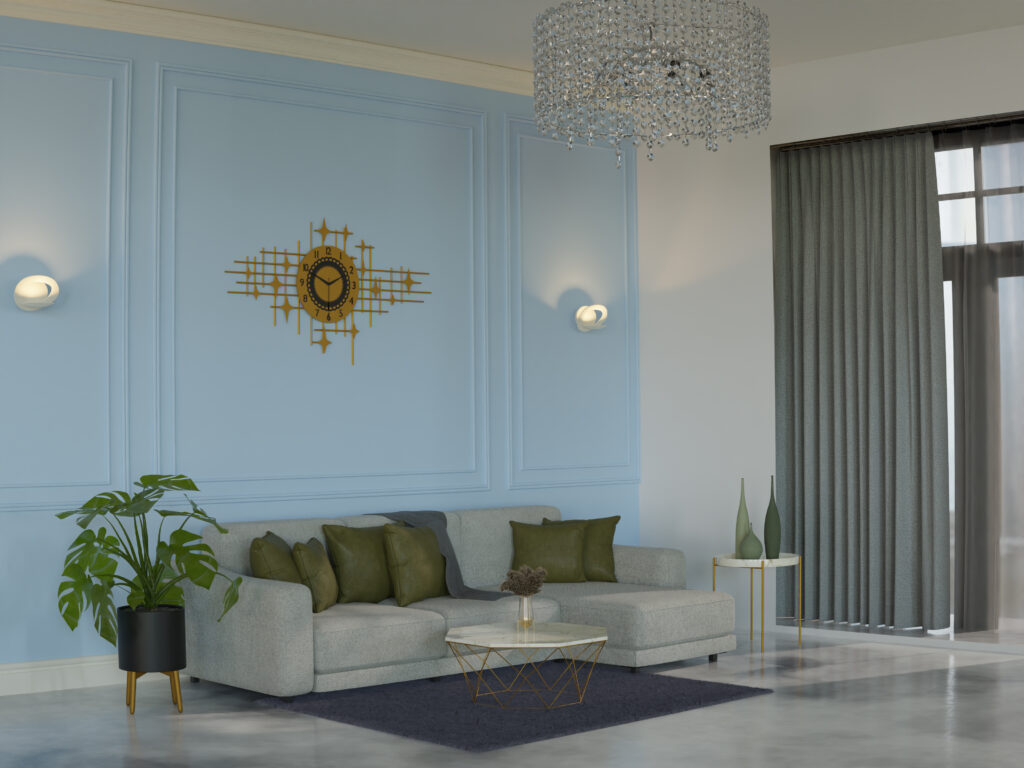
The Living Room: The Zone of Social Interaction
As far as the important area meant for guests and socializing is concerned, it should be in North or East.
Seating: The patriarch of the family can Seat with His Back to East or North, which will Give Him an Edge in Command and Communication. The Guests can face towards West or South.
Heavy Furniture: Keep heavy furniture like sofas or cabinets in a South or West-facing wall.
Electronics: Televisions and other electronic devices go in the South-East corner, which corresponds to the Fire area.
The Pooja Room: The Zone of Divinity
“The most revered spot in a dwelling, namely ‘Pooja room’, can never be but in the north-east corner,” which is the most favorable spot for conducting ‘worship and meditation’.
Placement of Idols: Idols can be placed in such a way that worshipers face either East or North.
Storage: Pooja room must not be used for storage purposes, especially for things which are not related to worship.
Vastu Compliant Colors & Materials
Color and material selection are powerful tools in Vastu Shastra interior design to balance the five elements.
| Direction/Element | Vastu-Compliant Colors | Colors to Avoid |
| North-East (Water) | Light Blue, White, Silver | Red, Orange, Pink (Fire colors) |
| South-East (Fire) | Orange, Pink, Red, Yellow | Blue, Black (Water colors) |
| South-West (Earth) | Yellow, Beige, Brown, Earth Tones | Blue, White (Water/Space colors) |
| North-West (Air) | White, Light Grey, Metallic | Dark colors |
Material Guidelines
Wood: Wood is a very good option if it is natural wood. One should avoid using too much metal in a bedroom.
Mirrors: Providing good-quality mirrors can make a good impression. Hence, it is not a good idea to keep a broken or chipped mirror in a house
Flooring: Marble and granite will make optimal selections, but it is important to see to it that the floor tiles are not cut into parts.
Conclusion: Designing for Prosperity and Peace
Vastu Shastra interior design is more than just a set of rules; it is a holistic approach to living that seeks to align your personal space with the natural world. By consciously choosing the right directions, colors, and materials, you are creating an environment that supports your health, wealth, and happiness. A Vastu-compliant home is a harmonious home, and that is the ultimate goal of good interior design.
Ready to design a home that is both beautiful and blessed?
At Inlight Interiors, we specialize in creating bespoke designs that perfectly integrate modern aesthetics with the time-tested principles of Vastu Shastra. Our experts ensure your home is optimized for both style and positive energy flow from the very first blueprint.
Ensure your new home design is perfectly Vastu-compliant from day one. Consult with our Vastu-integrated design experts today.